
Are You an NRI? A Must-Read Before Investing in Indian Real Estate
FEMA, repatriation, Power of Attorney, NRE/NRO routing — the seven things to verify before signing.

NRIs are now ~17% of KW Group's buyer base, and we see the same questions on every first call. Here is the seven-point checklist we walk every NRI buyer through before they pay the booking amount.
1. FEMA status
Under FEMA 1999, an NRI is an Indian citizen residing abroad for employment, business or any purpose indicating intent to stay outside India for an uncertain period. A PIO is a person of Indian origin (excluding citizens of Pakistan, Bangladesh, Sri Lanka, Afghanistan, China, Iran, Nepal and Bhutan). Both categories can buy any number of residential or commercial properties in India without RBI consent.
2. Payment route
All payments must come via normal banking channels — either inward remittance from your overseas bank, or by debit to an NRE / NRO / FCNR(B) account. Direct offshore payment to the developer is not permitted.
3. Power of Attorney
Since you cannot be physically present for every registration, a PoA executed in favour of a resident family member is operationally required. Get the PoA attested by the Indian consulate in your country of residence, then adjudicated and registered in India.
4. NRI home loan
Most Indian lenders offer NRI loans up to 80% of property value, with tenures capped at 5-7 years (versus 20+ for residents). Underwriting looks at your overseas salary, employer profile, and likelihood of continued overseas employment.
5. Repatriation rules
Sale proceeds of up to two residential properties can be repatriated abroad — but the amount is capped at the original purchase consideration (i.e., the capital you brought in). Capital appreciation above that has to be held in your NRO account.
6. Co-ownership rules
You can co-purchase with an Indian citizen or another NRI / PIO. You cannot co-purchase with a foreign national.
7. Tax filing
Standard tax benefits (Section 24(b) interest deduction, Section 80C principal) apply only when you file Indian tax returns. The TDS on resale is 20% (long-term) or your marginal rate (short-term).
KW Landmarks
Where readers become residents.
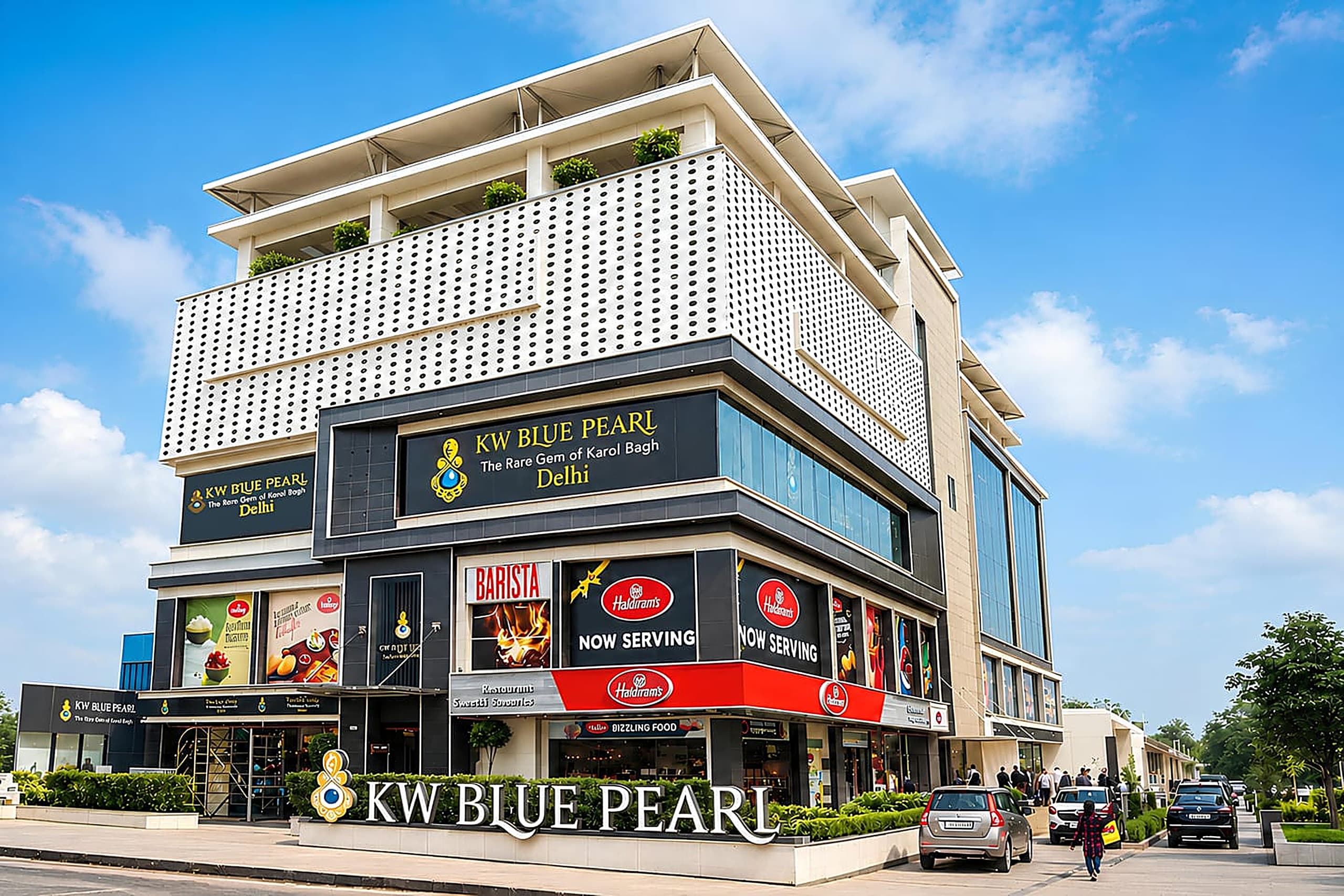 Ready to Move
The Rare Gem of Karol Bagh
KW Blue Pearl
A vibrant food, café & dining destination on DB Gupta Road — DDA-allotted freehold corner property, two minutes from Jhandewalan Metro.
 Ready to Move
Freedom Shopping
KW Delhi 6
A 3.21-acre commercial landmark in Raj Nagar Extension — bringing Chandni Chowk's essence, reimagined to global standards.
Reader questions